
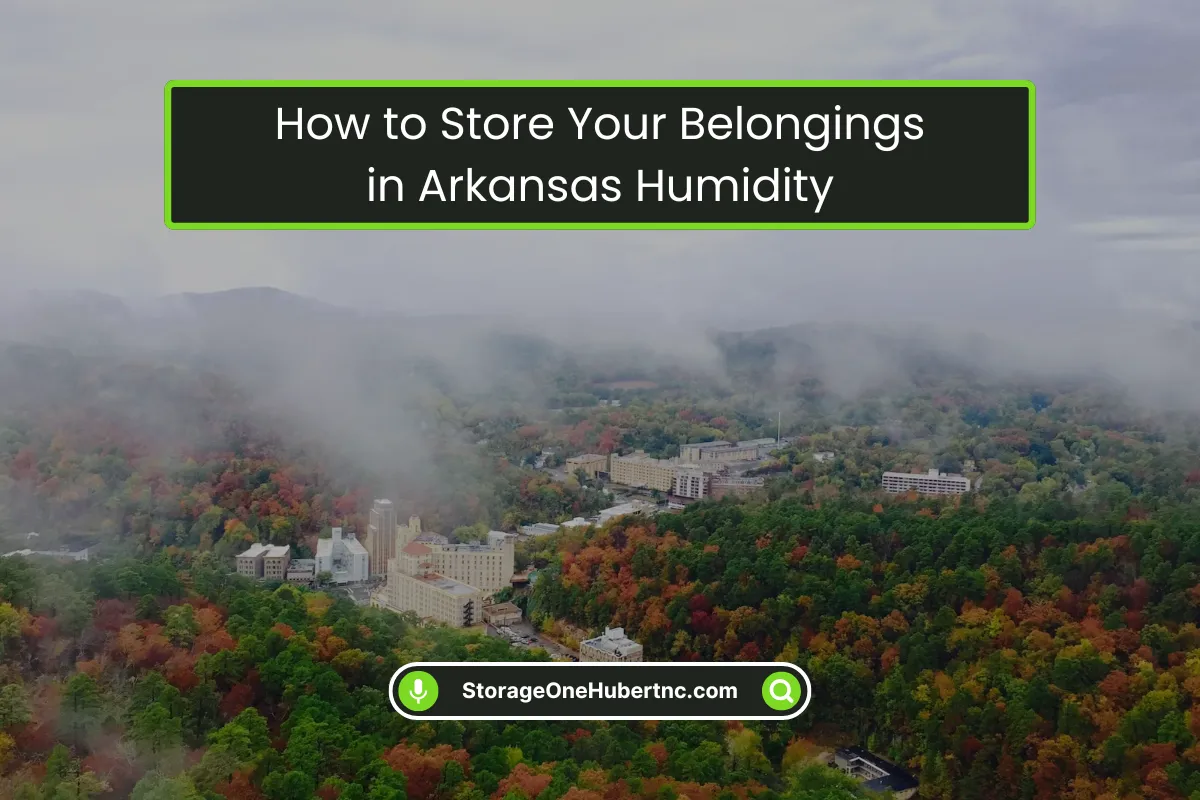
So, my cousin Jenny moved to Fayetteville last year and had to put a bunch of her stuff in storage. She called me a few weeks ago, almost in tears. She’d gone to grab her high school yearbooks and some of her mom’s old quilts.
“It’s all ruined,” she said. “Everything smells like a locker room and my yearbooks are all wavy and stuck together.”
My heart just sank. I should have warned her. See, Jenny is from Arizona. She doesn’t get it. You can’t just put things in a box here and forget about them. Our air isn’t just hot; it’s a wet, heavy blanket that settles into everything you own.
I drove over to help her sort through the damage. Opening those cardboard boxes was a sad affair. That distinct, damp smell hit us first. The pages of her yearbooks were fused together with mildew. One of the quilts had a dark, ugly spot blooming in the center. It was a total loss.
We stood there in that sweltering unit, and I gave her the talk I’m about to give you. It’s the “Arkansas Storage Talk.” No fluff, just the straight truth from someone who’s seen their own stuff get wrecked.
Lesson 1: Your Storage Unit is Either Your Best Friend or Your Worst Enemy
Jenny had rented the cheapest, drive-up outdoor unit she could find. For stuff like metal patio chairs or your kid’s old plastic toys, that’s fine. They can tough it out.
But for the things that matter? The photo albums, the wooden dresser your grandpa built, your wedding dress? You have to get a climate-controlled unit. I don’t care if it’s an extra twenty bucks a month. Just do it.
Think of it this way: a standard unit is like a fancy shed. A climate-controlled unit is like a clean, dry, indoor room. It has a system that constantly fights the humidity, pulling that water right out of the air. It stops the “sweating” that happens when the temperature swings from a 95-degree day to a 70-degree night.
After the “Great Jenny Catastrophe,” I became a bit of a nut about this. It’s why at Storage One Hubert, I personally check on our climate-control systems way more than I probably need to. I have nightmares about someone’s photo albums getting ruined. I won’t let it happen on my watch.
Lesson 2: Cardboard Boxes are the Devil Here
I know they’re free. I know they stack nicely. But in Arkansas, a cardboard box is basically a welcome mat for mold. It absorbs moisture from the air and then happily passes it along to whatever is inside.
You know what works? Those plastic totes you see at Walmart. The ones with the yellow lids that snap on. Buy them. They are worth every single penny. They create a seal that the humidity can’t crack. I use the clear ones so I can see exactly what’s in there without having to open all of them.
Lesson 3: A Few Down-Home Tricks My Dad Taught Me
This is the stuff you won’t find in a manual.
- Pallets are your pal: Never, ever set anything directly on the concrete floor. Concrete draws moisture from the ground. Go to any store getting a delivery and ask for a wooden pallet or two. They’ll usually just give them to you. Setting your stuff on pallets creates a crucial air barrier. It’s a game-changer.
- Leave a little breathing room: Don’t jam-pack your unit like a Tetris game. If you can, leave a small gap between your stuff and the walls. Stagnant, trapped air is musty air. Let it move around a little.
- The Baking Soda Trick: Go to the dollar store, buy four boxes of plain old baking soda. Open them up and place one in each corner of your unit. They’ll quietly absorb odors and moisture for months. It’s the cheapest insurance you can buy.
The Bottom Line
Look, storing your things here doesn’t have to end in tragedy. Jenny learned her lesson the hard way so you don’t have to. Get a climate-controlled unit, use plastic totes, and use those pallets. It’s that simple.
And if you want a place where the guy who runs it has literally seen what mold can do to a family quilt and will do everything in his power to make sure it never happens to your stuff, you know where to find me. At Storage One Hubert, we get it because we live here too.







0 Comments